FortisBC submits long-term plan to provide reliable, affordable energy for customers across British Columbia
If accepted by the BCUC, the plan will guide investments in infrastructure, energy-savings programs and lower carbon gases
SURREY, BC, April 7, 2026 /CNW/ – FortisBC Energy Inc. (FortisBC) has submitted its 2026 long-term gas resource plan to the British Columbia Utilities Commission (BCUC). The plan is FortisBC’s investment roadmap to 2050,1 outlining how it will meet customers’ energy needs, while balancing affordability, reliability and sustainability–now and in the future–to deliver energy for a better B.C.
As customers’ energy needs continue to grow and B.C. works toward its climate goals, long-term planning is essential to ensure FortisBC’s customers continue to have dependable and affordable energy they can count on. FortisBC will make additional investments to upgrade its gas system to ensure customers have the energy they need, when they need it. These investments will help support economic development in British Columbia and build on current major projects, such as the advanced metering infrastructure project, the Eagle Mountain – Woodfibre Gas Pipeline Project, Okanagan Capacity Mitigation Project and Tilbury liquefied natural gas storage expansion project. These investments will also strengthen the ability of FortisBC’s gas system to ensure safe and reliable energy delivery for customers during increasingly extreme weather and periods of peak demand.
“Our gas system plays a critical role in meeting the growing energy needs of our customers,” said Joe Mazza, vice president, energy supply and resource development. “This is our long-term plan to provide customers with affordable and reliable energy while continuing to support provincial climate action goals. This plan will guide our future investments to help meet these goals.”
If its plan is accepted by the BCUC, FortisBC projects making additional investments in energy conservation programs to help customers save energy and expand its supply of lower carbon gases,2,3 including Renewable Natural Gas4 (RNG) and, potentially in the future, hydrogen. These initiatives would be aligned with provincial climate action goals and help reduce overall emissions. The investments would build on the current 2022 long-term resource plan, under which FortisBC is investing a record $694.8 million between 2024 and 2027 in energy-efficiency programs and working to reduce overall emissions by acquiring more lower carbon gases5, like RNG.
To ensure the long-term gas resource plan reflects the needs and values of FortisBC’s customers and the communities it serves, FortisBC engaged with technical working groups representing the interests of customers, Indigenous communities, associations, builders, developers, environmental organizations, provincial and local governments and other interested parties over two years. The feedback FortisBC heard highlighted the need to consider affordability, reliability and resilience of the gas system, and supporting provincial climate goals in its plan to meet customers’ future energy needs.6
The BCUC will review FortisBC’s proposed long-term gas resource plan, which will include opportunities for input from the public and interested parties. Visit fortisbc.com/gasresourceplan to learn more about or read FortisBC’s long-term gas resource plan.
fortisbc.com
@fortisbc
24-hour media line: 1-855-FBC-NEWS or 1-855-322-6397
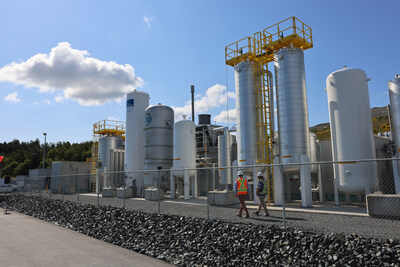
The Hartland Landfill RNG plant in Victoria.
About FortisBC Energy Inc.
FortisBC Energy Inc. is a regulated utility focused on providing safe, reliable and affordable energy, including natural gas and propane and continuing to acquire renewable and lower-carbon gas, such as natural gas designated as Renewable Natural Gas. FortisBC Energy Inc. employs around 2,160 British Columbians and serves approximately 1,098,400 customers across British Columbia. FortisBC Energy Inc. owns and operates two liquefied natural gas storage facilities and approximately 51,700 kilometres of gas transmission and distribution lines. FortisBC Energy Inc. is a subsidiary of Fortis Inc., a leader in the North American regulated electricity and gas utility industry. FortisBC Energy Inc. uses the FortisBC name and logo under license from Fortis Inc. For further information on FortisBC Energy Inc., visit fortisbc.com. For further information on Fortis Inc., visit fortisinc.com.
|
___________________________________ |
|
1 The 2026 Long-Term Resource Plan uses a 27-year planning horizon from 2024 to 2050 instead of the 20-year horizon used in previous plans to align with the timelines for provincial climate action goals under the Climate Change Accountability Act. |
|
2 FortisBC uses the term renewable and lower carbon gas to refer collectively to the lower carbon gases or fuels that the utility can acquire under the Greenhouse Gas Reduction (Clean Energy) Regulation, which are: Renewable Natural Gas (also called RNG or biomethane), hydrogen, synthesis gas (from wood waste) and lignin. FortisBC’s renewable and lower carbon gas portfolio currently includes only Renewable Natural Gas. Other gases and fuels may be added to the program over time. Depending on their source, all of these gases have differing levels of lifecycle carbon intensity. However, all of these gases are lower carbon when compared to the lifecycle carbon intensity of conventional natural gas. The current burner tip emission factor of RNG is 0.27 grams of carbon dioxide equivalent per megajoule of energy (gCO2e/MJ) and the current renewable and lower carbon gas portfolio lifecycle emissions for stationary combustion are -22 gCO2e/MJ. This is below B.C.’s lifecycle carbon intensity threshold of 30.8 gCO2e/MJ as set out in the 2024 Greenhouse Gas Reduction Regulation amendments. |
|
3 FortisBC. (2026). FortisBC Energy Inc.: 2026 Long-Term Gas Resource Plan, p. 6-5. |
|
4 Renewable Natural Gas (also called RNG or biomethane) is produced in a different manner than conventional natural gas. It is derived from biogas, which is produced from decomposing organic waste from landfills, agricultural waste and wastewater from treatment facilities. The biogas is captured and cleaned to create RNG. When RNG is added to North America’s natural gas system, it mixes with conventional natural gas. This means we’re unable to direct RNG to a specific customer. But the more RNG is added to the gas system, the less conventional natural gas is needed, thereby reducing the use of fossil fuels and overall greenhouse gas emissions. |
|
5 When compared to the lifecycle carbon intensity of conventional natural gas. The burner tip emission factor of FortisBC’s current Renewable Natural Gas (also called RNG or biomethane) portfolio is 0.27 grams of carbon dioxide equivalent per megajoule of energy (gCO2e/MJ). FortisBC’s current RNG portfolio lifecycle emissions for stationary combustion are -22 gCO2e/MJ. This is below B.C.’s lifecycle carbon intensity threshold of 30.8 gCO2e/MJ as set out in the 2024 Greenhouse Gas Reduction Regulation amendments. |
|
6 FortisBC. (2026). FortisBC Energy Inc.: 2026 Long-Term Gas Resource Plan, p. ES-16. |
SOURCE FortisBC Energy Inc.