HIGHLIGHTS
- 14-year mine life and US$192.1 million after-tax NPV (10% discount rate): New NI 43-101 Technical Report, prepared by the Company’s Qualified Persons, establishing a life-of-mine plan for Guanaco (Chile) from January 2026 to February 2040, built on existing mining and processing infrastructure.
- Mineral Reserves: Proven and Probable Mineral Reserves of 18.1 Mt grading 0.84 g/t Au and 5.43 g/t Ag, containing approximately 352 Koz Au and 1.493 Moz Ag (estimated at US$2,200/oz Au and US$25/oz Ag).
- Measured & Indicated Resources: 17.0 Mt grading 0.94 g/t Au and 6.11 g/t Ag containing approximately 511 Koz Au and 3.269 Moz Ag (estimated at US$2,500/oz Au and US$27.5/oz Ag).
- Inferred Resources: 2.0 Mt grading 1.17 g/t Au and 7.14 g/t Ag, containing approximately 77 Koz Au and 466 Koz Ag.
- Metallurgical recoveries: Average Life of Mine (LOM) recovery of 72% for gold and 47% for silver. The LOM average is materially influenced by heap-reprocessing material; higher-grade feed achieves higher recoveries.
- Metal prices (economic analysis): LOM average prices of US$3,135/oz gold and US$42/oz silver, used in the discounted cash-flow (DCF) model and based on the median of independent third-party consensus forecasts. Mineral Resources and Mineral Reserves are estimated at the lower prices noted above.
- Costs & Capital: All-in Sustaining Cost (AISC) of US$2,114/oz AuEq and Operating Cost (C1) of US$1,978/oz AuEq. LOM capital expenditure of US$13.9 million (US$2.2 million sustaining, US$11.7 million closure and reclamation).
*See tables below for assumptions used in the estimates
**Only Measured and Indicated mineral resources are used in calculating the NPV
Sydney, Australia–(Newsfile Corp. – July 22, 2026) – Austral Gold Limited (ASX: AGD) (TSXV: AGLD) (OTCQB: AGLDF) (“Austral” or the “Company”), an established gold producer with two 100% operating mine complexes in Argentina and Chile, is pleased to announce an updated Mineral Reserve and Mineral Resource estimate and a new life-of-mine plan for its Guanaco Mine in the Antofagasta Region of Chile, reported in accordance with Canadian National Instrument 43-101 (CIM Definition Standards), as set out in a new Technical Report entitled “Technical Report on the Guanaco Mine, Antofagasta Region, Chile” with an effective date as of May 31, 2026 and a signature date as of July 21, 2026 (the “2026 Technical Report”). The Mineral Resources and Ore Reserves disclosed in this announcement are also reported in accordance with the JORC Code (2012 Edition) and ASX Listing Rules. The new Technical Report updates and supersedes the Company’s 2022 Technical Report announced on 29 March 2022.
Chief Executive Officer of Austral Gold, Stabro Kasaneva, commented, “We believe the significance of this Technical Report extends well beyond the updated Mineral Reserve. It supports the view that Guanaco can sustain a multi-year mining operation with an approximate mine plan of 14 years, built on existing infrastructure, a disciplined capital program, and a consistent production profile. What differentiates Austral Gold as a junior producer is that it can extend mine life while leveraging existing, permitted processing facilities and established operating infrastructure, although part of the expanded mine plan remains subject to outstanding permits. We anticipate this positions Austral Gold with a strong platform to generate sustainable value in the future from both Guanaco in Chile and Casposo in Argentina.
“We believe that one of Guanaco’s key competitive advantages is that this approach reduces execution risk and capital intensity compared with a greenfield development, allowing the Company to focus capital on value-generating mining activities rather than on major infrastructure projects.”
The 2026 Technical Report has been filed concurrently with this announcement on the ASX (www.asx.com) and SEDAR+ (www.sedarplus.ca).
The Mineral Resources and Ore Reserves disclosed in this announcement are reported in accordance with the JORC Code (2012 Edition) and ASX Listing Rules.
Updated Geological Interpretation and Mineral Resource Basis
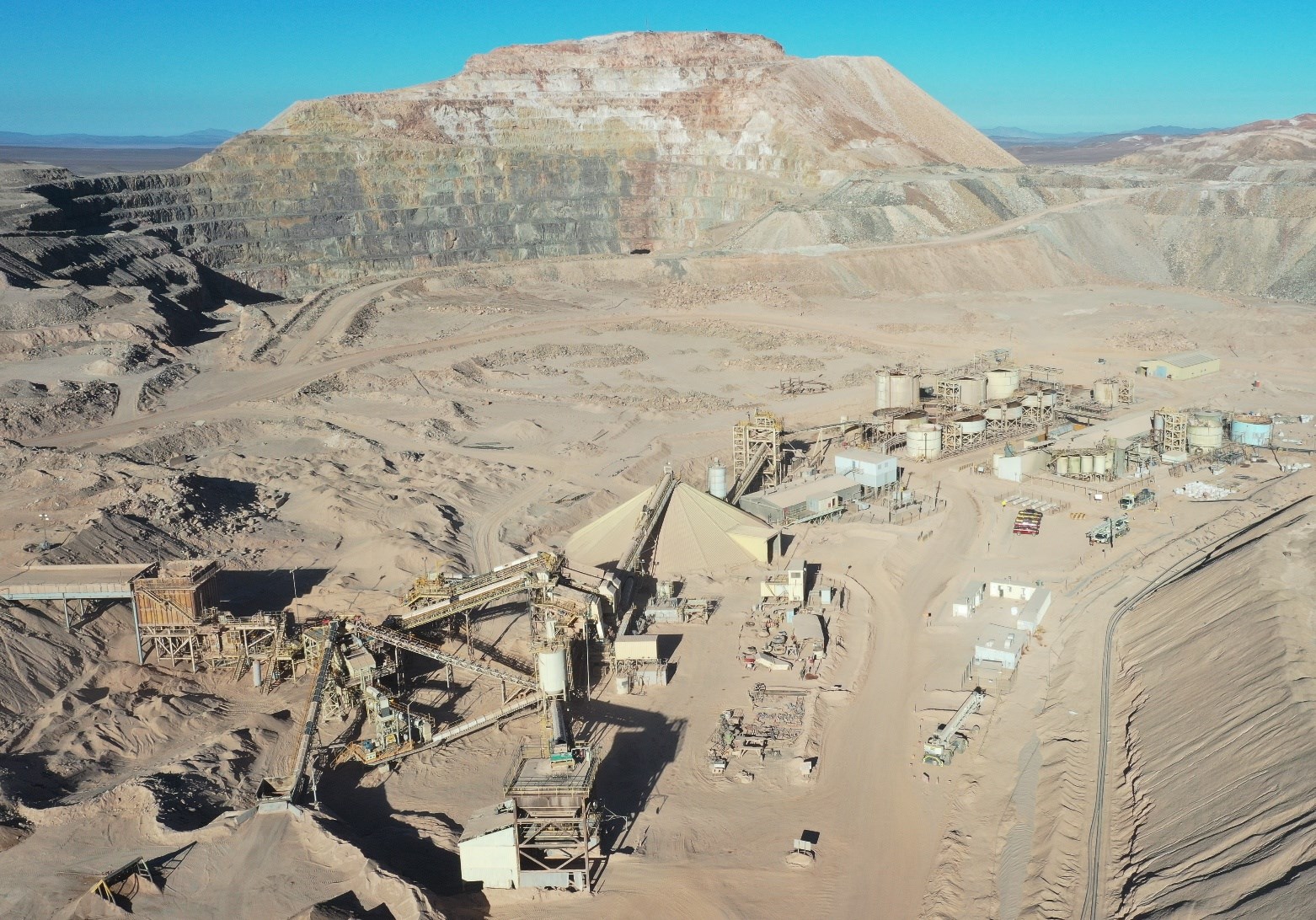
The Guanaco Mine comprises the following deposits: Dumbo, Defensa, Perseverancia, Quillota, Inesperada, and three legacy heap-leach pads (Heaps 1, 2, and 3) located on site.
The 2026 Technical Report follows a detailed review of the existing data for the Guanaco Mine and a new geological modelling of the deposits, characterising them by their geological features and grade distribution. This work established a robust geological basis for defining the remaining in-situ Mineral Resources. The Mineral Resource estimate is supported by dense 25 × 25 m drill spacing, which defines Indicated Mineral Resources with a reasonable level of geological confidence, consistent with industry best practices and with the requirement for reasonable prospects for eventual economic extraction (RPEEE). Using this Mineral Resource base as the starting point, Mineral Reserves were estimated by applying metal prices, operating and capital costs, and mining and metallurgical parameters that have all been updated since the 2022 Technical Report.
Economic Analysis and Life-of-Mine Plan
The 2026 Technical Report presents an updated life-of-mine plan and cash-flow model for Guanaco Mine based on Mineral Reserves. Inferred Mineral Resources have been excluded from economic analysis.
In determining the Mineral Reserves, the Qualified Persons have considered and applied the relevant modifying factors, including mining, metallurgical, processing, infrastructure, economic, marketing, legal, environmental, social and governmental considerations.
The key outputs are summarised below.
| Metric |
Result |
| After-tax NPV (10.0% discount rate) |
US$192.1 M |
| Undiscounted pre-tax free cash flow |
US$379.4 M |
| Undiscounted post-tax free cash flow |
US$281.6 M |
| All-in Sustaining Cost (AISC) |
US$2,114 / oz AuEq |
| Average operating cost (C1) |
US$1,978 / oz AuEq |
| Average operating cost (per tonne) |
US$41 / t processed |
| Total Processed Ore (Mt) |
18.1 |
| Mine life |
~14 years |
| Avg. annual recovered gold |
24,838 oz |
| Avg. annual recovered silver |
105,262 oz |
| LOM capital expenditure |
US$13.9 M |
| – Sustaining capital |
US$2.2 M |
| – Closure & reclamation |
US$11.7 M |
| Avg. metallurgical recovery – gold |
72% |
| Avg. metallurgical recovery – silver |
47% |
| Gold price assumption (LOM avg.) |
US$3,135 / oz |
| Silver price assumption (LOM avg.) |
US$42 / oz |
Metal Price Assumptions: The life-of-mine economic model applies gold and silver prices based on the median of third-party consensus forecasts obtained from an internationally recognised market data provider. Over the mine life, gold prices range from a maximum of US$4,500/oz to a long-term minimum of US$2,500/oz, and silver prices from a maximum of US$70/oz to a long-term minimum of US$30/oz, equivalent to life-of-mine average prices of approximately US$3,135/oz gold and US$42/oz silver. These planning prices are used solely in the cash-flow model and differ from the lower prices used to estimate Mineral Reserves (US$2,200/oz gold and US$25/oz silver) and Mineral Resources (US$2,500/oz gold and US$27.5/oz silver).
Environmental, Permitting and Other Risk Factors: Other than the permitting matter described below, the Company is not aware of any known environmental, permitting, legal, title, taxation, socio-economic, marketing, political, or other factors that could materially affect the Mineral Resource or Mineral Reserve estimates or the potential development of the Guanaco project.
Completion of the Environmental Impact Declaration (Declaración de Impacto Ambiental, or “DIA”) and associated sectoral permits for the Inesperada and Dumbo areas remains outstanding, with approval currently targeted for Q4 2026 / Q1 2027. Ore from these areas is included in the Proven and Probable Mineral Reserve and in the ~14-year life-of-mine production target: together they account for approximately 5.9 Mt, or about 32% of Reserve tonnes, some 185,000 recoverable ounces of gold (~53% of Reserve gold) and 823,000 recoverable ounces of silver (~55% of Reserve silver). Accordingly, a substantial portion of the Mineral Reserve and of forecast production is contingent on receipt of the DIA and associated permits. The Competent Person / Qualified Person considers there to be a reasonable basis to expect that the required approvals will be obtained; however, there is no certainty that they will be granted within the anticipated timeframe, or at all, and any delay or refusal could materially affect the production schedule and project economics.
Comparison with the 2022 Technical Report
The 2026 Technical Report updates and supersedes the Company’s 2022 Technical Report (prepared by SLR and announced on 29 March 2022, effective date 31 December 2021), which covered the broader Guanaco-Amancaya Operation, including the Amancaya underground mine (since depleted). On this basis, the 2026 Technical Report reports an after-tax NPV of US$192.1 million (10% discount rate), compared with US$77 million (6.89%) in the 2022 study, and a life-of-mine of approximately 14 years (Jan 2026-Feb 2040), compared with approximately 12 years (2022-2033). The two studies differ in scope, effective date, metal-price assumptions, discount rate and mining method and, given intervening mining and depletion, together with a comprehensive re-modelling of the Guanaco deposits, are not directly comparable on a like-for-like basis.
The 2026 mine plan is based entirely on open-pit extraction (the Dumbo, Defensa, Perseverancia, Quillota and Inesperada pits, scheduled from mid-2028 to 2040) together with the reprocessing of the existing heap-leach pads (2026 to mid-2032). No underground mining is included in the 2026 Mineral Reserve or economic analysis.
The updated Technical Report establishes Guanaco as a long-life gold and silver operation which supports a multi-year cash flow from existing infrastructure while maintaining significant exploration upside across the district.
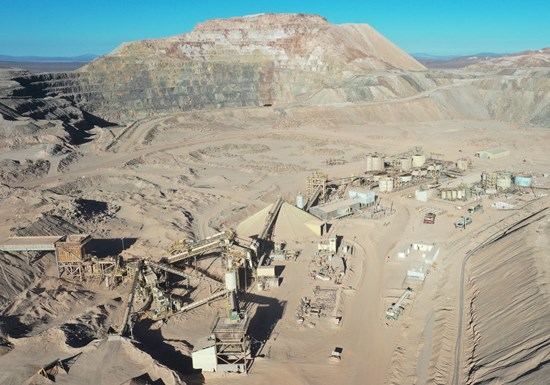
Guanaco Processing Facility
To view an enhanced version of this graphic, please visit:
https://images.newsfilecorp.com/files/690/306181_ebf56089d4711b8a_002full.jpg
Mineral Resources Statement as of November 30, 2025
Austral Gold Limited – Guanaco Mine
| Category |
Mass |
Grade |
Ounces Contained |
Ounces Recoverable |
|
(000′ t) |
(g/t Au) |
(g/t Ag) |
(g/t AuEq) |
(g/t Cu) |
(000’s oz Au) |
(000’s oz Ag) |
(000’s oz AuEq) |
(000’s oz Au) |
(000’s oz Ag) |
(000’s oz AuEq) |
| Open-Pit |
|
|
|
|
|
|
|
|
|
|
|
| Measured |
18 |
7.93 |
11.74 |
8.08 |
197 |
5 |
7 |
5 |
4 |
4 |
4 |
| Indicated |
8,941 |
1.12 |
8.58 |
1.22 |
935 |
322 |
2,466 |
350 |
285 |
1,386 |
300 |
| M&I |
8,958 |
1.14 |
8.59 |
1.23 |
934 |
327 |
2,473 |
354 |
289 |
1,390 |
304 |
| Inferred |
2,033 |
1.17 |
7.14 |
1.25 |
325 |
77 |
466 |
82 |
68 |
262 |
71 |
|
|
|
|
|
|
|
|
|
|
|
|
| Heaps |
|
|
|
|
|
|
|
|
|
|
|
| Measured |
– |
– |
– |
– |
– |
– |
– |
– |
– |
– |
– |
| Indicated |
8,062 |
0.71 |
3.09 |
0.74 |
1,627 |
184 |
796 |
193 |
136 |
317 |
139 |
| M&I |
8,062 |
0.71 |
3.09 |
0.74 |
1,627 |
184 |
796 |
193 |
136 |
317 |
139 |
| Inferred |
– |
– |
– |
– |
– |
– |
– |
– |
– |
– |
– |
|
|
|
|
|
|
|
|
|
|
|
|
| Total |
|
|
|
|
|
|
|
|
|
|
|
| Measured |
18 |
7.93 |
11.74 |
8.08 |
394 |
5 |
7 |
5 |
4 |
4 |
4 |
| Indicated |
17,003 |
0.93 |
6.10 |
1.00 |
1,248 |
506 |
3,262 |
542 |
420 |
1,703 |
439 |
| M&I |
17,021 |
0.94 |
6.11 |
1.01 |
1,247 |
511 |
3,269 |
547 |
425 |
1,707 |
443 |
| Inferred |
2,033 |
1.17 |
7.14 |
1.25 |
659 |
77 |
466 |
82 |
68 |
262 |
71 |
Notes:
- Effective date November 30, 2025.
- Mineral Resources are inclusive of those Mineral Resources modified to produce the Mineral Reserves.
- Stationary domains were modelled based on lithological, alteration and structural continuity.
- Mineral Resources were classified and reported in accordance with CIM Definition Standards and NI 43-101 requirements.
- Measured Resources were defined using a 3.5 m x 20 m channel grid in both strike and dip directions for ore mineralization.
- Indicated Resources were defined using a 25 m x 25 m drill grid in both strike and dip directions for ore mineralization.
- Heaps 1 and 2 were defined using a 50 m x 50 m drill grid in both major and semi-major directions; the minor direction. corresponds to the vertical extension of every single sonic drill hole that was sampled at 1 m length, and Heap 3 resources were defined based on operational history and sampling data.
- Variable cut-off grades were applied by sector, based on spatial location and physical characteristics of the mineralized material: Dumbo: HL=0.38 g/t AuEq and AL=0.62 g/t AuEq | Defensa: HL=0.355 g/t AuEq and AL=0.6 g/t AuEq
- Perseverancia: HL=0.38 g/t AuEq and AL=0.62 g/t AuEq | Quillota: HL=0.36 g/t AuEq and AL=0.6 g/t AuEq | Los Nanos: HL=0.39 g/t AuEq and AL=0.62 g/t AuEq | Inesperada: HL=0.41 g/t AuEq and AL=0.64 g/t AuEq | Heap 1: HL=0.37 g/t AuEq and AL=0.64 g/t AuEq | Heap 2: HL=0.34 g/t AuEq and AL=0.6 g/t AuEq | Heap 3: HL=0.439 g/t AuEq and AL=0.6 g/t AuEq
- The following bulk densities were applied for tonnage calculations: Open Pits: 2.5 t/m3, Heap 1: 1.765 t/m3, Heap 2: 1.62 t/m3, Heap 3: 1.703 t/m3
- Mineral Resources were constrained by open-pit optimization, using metal prices of US$2,500 /oz for gold and US$27.5 /oz for silver.
- AuEq = (g/t) Au + (g/t) Ag / 90.91 [recovery factor 90.91 = US$2,500 /oz for gold / US$27.5 /oz for silver]
- Ounces contained were not applied to metallurgical recoveries.
- Ounces recoverable were applied to metallurgical recoveries by deposits.
- Metallurgical recovery rates were applied by deposit, based on historical and test data. Open Pits: HL: 70% Au and 40% Ag – AL: 91.5% Au and 60% Ag. Heap 1: HL: 54% Au and 30% Ag – AL: 80% Au and 50% Ag. Heap 2: HL: 60% Au and 30% Ag – AL: 85% Au and 50% Ag. Heap 3: HL: 46% Au and 30% Ag – AL: 85% Au and 50% Ag
- Totals may not sum exactly due to rounding.
Mineral Resources that are not Mineral Reserves do not have demonstrated economic viability.
Summary of Mineral Reserves as of May 29, 2026
Heap Leach + Agitation
Austral Gold Limited – Guanaco Mine (as at May 29, 2026)
| Category |
Tonnes |
Grade |
Metallurgical Recovery |
Ounces |
| (000 t) |
(g/t Au) |
(g/t Ag) |
(% Au) |
(% Ag) |
(000 oz Au) |
(000 oz Ag) |
| TOTAL OPEN PIT |
| Proven |
– |
– |
– |
– |
– |
– |
– |
| Probable |
8,156 |
1.13 |
8.38 |
88.2 |
56.3 |
262 |
1,236 |
| Subtotal |
8,156 |
1.13 |
8.38 |
88.2 |
56.3 |
262 |
1,236 |
| TOTAL HEAP |
| Proven |
– |
– |
– |
– |
– |
– |
– |
| Probable |
9,983 |
0.60 |
3.01 |
52.9 |
35.9 |
90 |
257 |
| Subtotal |
9,983 |
0.60 |
3.01 |
52.9 |
35.9 |
90 |
257 |
| TOTAL MINERAL RESERVES |
18,139 |
0.84 |
5.43 |
71.9 |
47.2 |
352 |
1,493 |
Notes:
1) Mineral Reserves were estimated using a gold price of US$2,200/oz and a silver price of US$25/oz.
2) Variable cut-off grades were applied by sector, based on spatial location and physical characteristics of the mineralized material:
- Dumbo: 0.44 g/t AuEq,
- Defensa: 0.40 g/t AuEq,
- Perseverancia: 0.44 g/t AuEq,
- Quillota: 0.41 g/t AuEq,
- Inesperada: 0.46 g/t AuEq,
- In Heaps 1, 2 and 3, no cut-off grade was used since the average grade of each deposit is considered.
3) The following bulk densities were applied for tonnage calculations:
- In-situ mine material: 2.5 t/m3
- In Heaps 1, 2 and 3, the values considered were 1.77 t/m3, 1.62 t/m3 and 1.70 t/m3, respectively
4) Totals may not sum exactly due to rounding.
Mineral Reserves Statement as of May 29, 2026
Austral Gold Limited – Guanaco Mine
| Category |
Tonnes |
Grade |
Metallurgical Recovery |
Ounces |
|
(000 t) |
(g/t Au) |
(g/t Ag) |
(% Au) |
(%Ag) |
(000 oz Au) |
(000 oz Ag) |
| Dumbo -Phase 1 |
|
| Proven |
– |
– |
– |
– |
– |
– |
– |
| Probable |
4,099 |
1.19 |
5.35 |
87.27 |
54.78 |
137 |
386 |
| Prov + Prob |
4,099 |
1.19 |
5.35 |
87.27 |
54.78 |
137 |
386 |
| Defensa-Phase 1 |
|
– |
– |
|
|
– |
– |
| Proven |
– |
– |
– |
– |
– |
– |
– |
| Probable |
1,042 |
0.90 |
11.04 |
87.47 |
55.48 |
26 |
205 |
| Prov + Prob |
1,042 |
0.90 |
11.04 |
87.47 |
55.48 |
26 |
205 |
| Perseverancia- -Phase 1 |
|
– |
– |
|
|
– |
– |
| Proven |
– |
– |
– |
– |
– |
– |
– |
| Probable |
867 |
1.50 |
10.02 |
89.93 |
57.02 |
38 |
159 |
| Prov + Prob |
867 |
1.50 |
10.02 |
89.93 |
57.02 |
38 |
159 |
| Perseverancia- -Phase 2 |
|
– |
– |
|
|
– |
– |
| Proven |
– |
– |
– |
– |
– |
– |
– |
| Probable |
154 |
1.17 |
11.34 |
89.58 |
58.02 |
5 |
33 |
| Prov + Prob |
154 |
1.17 |
11.34 |
89.58 |
58.02 |
5 |
33 |
| Perseverancia- -Phase 3 |
|
– |
– |
|
|
– |
– |
| Proven |
– |
– |
– |
– |
– |
– |
– |
| Probable |
116 |
1.37 |
5.26 |
88.74 |
53.51 |
5 |
10 |
| Prov + Prob |
116 |
1.37 |
5.26 |
88.74 |
53.51 |
5 |
10 |
| Quillota–Phase 1 |
|
– |
– |
|
|
– |
– |
| Proven |
– |
– |
– |
– |
– |
– |
– |
| Probable |
95 |
1.07 |
3.60 |
87.96 |
52.17 |
3 |
6 |
| Prov + Prob |
95 |
1.07 |
3.60 |
87.96 |
52.17 |
3 |
6 |
| Inesperada–Phase 1 |
|
– |
– |
|
|
– |
– |
| Proven |
– |
– |
– |
– |
– |
– |
– |
| Probable |
1,783 |
0.94 |
13.23 |
89.65 |
57.63 |
48 |
437 |
| Prov + Prob |
1,783 |
0.94 |
13.23 |
89.65 |
57.63 |
48 |
437 |
| Total Open Pit |
|
– |
– |
|
|
– |
– |
| Proven |
– |
– |
– |
– |
– |
– |
– |
| Probable |
8,156 |
1.13 |
8.38 |
88.2 |
56.3 |
262 |
1,236 |
| Prov + Prob |
8,156 |
1.13 |
8.38 |
88.2 |
56.3 |
262 |
1,236 |
| Heap 1 |
|
|
|
|
|
|
|
| Proven |
– |
– |
– |
– |
– |
– |
– |
| Probable |
4,183 |
0.51 |
2.76 |
52.0 |
30.0 |
36 |
111 |
| Prov + Prob |
4,183 |
0.51 |
2.76 |
52.0 |
30.0 |
36 |
111 |
| Heap 2 |
|
|
|
|
|
|
|
| Proven |
– |
– |
– |
– |
– |
– |
– |
| Probable |
2,621 |
0.61 |
2.81 |
36.38 |
20.69 |
19 |
49 |
| Prov + Prob |
2,621 |
0.61 |
2.81 |
36.38 |
20.69 |
19 |
49 |
| Heap 3 |
|
|
|
|
|
|
|
| Proven |
– |
– |
– |
– |
– |
– |
– |
| Probable |
3,179 |
0.71 |
3.51 |
49.09 |
26.82 |
36 |
96 |
| Prov + Prob |
2,621 |
0.61 |
2.81 |
36.38 |
20.69 |
36 |
96 |
|
|
|
|
|
|
|
|
| All Reserves |
|
– |
– |
|
|
– |
– |
| Proven |
– |
– |
– |
– |
– |
– |
– |
| Probable |
18,139 |
0.84 |
5.43 |
71.9 |
47.2 |
352 |
1,493 |
| Prov + Prob |
18,139 |
0.84 |
5.43 |
71.9 |
47.2 |
352 |
1,493 |
Notes:
1) Mineral Reserves were estimated using a gold price of US$2,200/oz and a silver price of US$25/oz.
2) Variable cut-off grades were applied by sector, based on spatial location and physical characteristics of the mineralized material:
- Dumbo: 0.44 g/t AuEq,
- Defensa: 0.40 g/t AuEq,
- Perseverancia: 0.44 g/t AuEq,
- Quillota: 0.41 g/t AuEq,
- Inesperada: 0.46 g/t AuEq,
- In Heaps 1, 2 and 3, no cut-off grade was used since the average grade of each deposit is considered.
3) The following bulk densities were applied for tonnage calculations:
- In-situ mine material: 2.5 t/m3
- In Heaps 1, 2 and 3, the values considered were 1.77 t/m3, 1.62 t/m3 and 1.70 t/m3, respectively
4) Totals may not sum exactly due to rounding.
Technical Content and Qualified Persons
The 2026 Technical Report filed concurrently in this announcement was prepared under the supervision of the following persons, each a non-Independent “Qualified Person” as defined by NI 43-101:
- Marcos Valencia, FAusIMM and Registered Member of the ChMC, Principal Geoscientist of the Company;
- Guillermo Valdés, Registered Member of the Ch.M.C, Mining Engineer and Technical Services Manager of the Company; and
- Francisco Pavez, Registered Member of the Ch.M.C, Metallurgical Civil Engineer and Manager of Metallurgical Processes of the Company,
- (collectively, the “Qualified Persons“).
The scientific and technical information contained in this announcement has been extracted from the 2026 Technical Report and has been reviewed and approved by the above Qualified Persons.
The 2026 Technical Report supporting the updated Mineral Reserve and Mineral Resource estimates for the Guanaco Operation, prepared in accordance with NI 43-101, has been filed concurrently with this announcement on the ASX and on SEDAR+ (www.sedarplus.ca).
Competent Person’s Statement
For the purposes of Listing Rule 5.22, the Company confirms that the updated Mineral Reserve and Mineral Resource estimates were based on work reviewed or compiled by the Marcos Valencia, Guillermo Valdés and Francisco Pavez, each a non-independent “Qualified Person” as defined by NI 43-101 and a “Competent Person” as defined in the JORC (2012) Code, either as a Member of the Australian Institute of Geoscientists, or members in good standing of Recognised Professional Organisations in Canada and the United States.
Each Competent Person is an employee of the Company.
Each Competent Person consents to the inclusion in this announcement of the matters based on his information in the form and context in which it appears.
Each Competent Person has sufficient experience which is relevant to the style of mineralisation and types of deposits under consideration and to the activities undertaken to qualify as a Competent Person as defined in the JORC (2012) Code.
Data Verification
All information contained in this announcement is derived from and supported by the 2026 Technical Report. The scientific and technical information included in the 2026 Technical Report, which forms the basis of this news release disclosure, was reviewed by the Qualified Persons who determined that the disclosure is consistent with the guidelines CIM guidelines and complies with the requirements of NI 43-101 for public disclosure.
The data verification was carried out by taking the original information, comparing it with what was reported in the 2022 technical report, and also reviewing the procedures that Austral applied during its drilling and quality assurance activities.
All information captured and processing procedures and protocols have been developed to detect deviations in the early stages of the process and to apply corrective measures for mitigation and to minimize the source of risk of failures in the information generated and declared as public.
A site visit was undertaken by each of the Qualified Persons. However, it was not possible to oversee the drilling procedures and processes for data collection. Each of the Qualified Persons reviewed the protocols and procedures and determined that are in line with industry standards.
Analytical laboratories for the project have not been inspected at this stage. A thorough Quality Assurance and Quality Control (“QA/QC”) program adhering to internationally accepted standards were completed for Austral drilling over the past phases. Each of the Qualified Persons is satisfied with the methods employed for internal data validation and for the purpose of the mineral resource estimate.
Each of the Qualified Persons considers that the sample preparation, security, and analytical procedures adopted for the resource drilling provide an adequate basis for the current mineral resource estimate and that the QAQC program and procedures developed by the Austral geology team and reviewed by each of the Qualified Persons are adequate. The data contained in the drill hole database were generated and collected according to the industrial standards and Austral applied proper programs to keep the security of the data developed by the Austral geology team and reviewed by each of the Qualified Persons.
Further Information
For the purposes of listing Rule 5.9.1, the Company wishes to provide a summary of the material assumptions and outcomes of the Technical Report that was used to upgrade the mineral resources to ore reserves. This information is to be read together with the JORC (2012) Code Table 1 Report.
Ore Reserve Basis
The Ore Reserve estimate has been derived from the Guanaco Mineral Resource Estimate dated 30 November 2025. Only Measured and Indicated Mineral Resources were considered for conversion to Ore Reserves. Measured Resources were converted to Proven Ore Reserves and Indicated Resources were converted to Probable Ore Reserves. Inferred Mineral Resources were excluded from the Ore Reserve estimate, mine schedule and economic analysis.
Geology and Mineralisation
Guanaco and Inesperada comprise high-sulphidation epithermal gold-silver deposits located in the Antofagasta Region of northern Chile. Mineralisation is hosted within structurally controlled silica-rich ledge systems associated with advanced argillic alteration and is concentrated within ENE- to E-W-trending structural corridors.
Sampling, Drilling and Data Quality
The Mineral Resource and Ore Reserve estimates are supported by extensive drilling and sampling completed since 2004, comprising:
- 697 reverse circulation drill holes for 108,243 m;
- 145 diamond drill holes for 24,206 m; and
- 14 combined RC/DDH drill holes for 6,451 m.
Resource estimation is supported by drilling, underground channel sampling and comprehensive QAQC procedures including certified reference materials, blanks, field duplicates, laboratory duplicates and coarse duplicates. Independent reviews by AMEC, SLR and RPA reported no material issues affecting the reliability of the sampling, assay database or geological interpretation.
Mineral Resource Estimation
Mineral Resources were estimated using Ordinary Kriging within geological domains interpreted from drilling, underground development and detailed geological mapping. Resource classification was based primarily on geological continuity, data quality and drill spacing, with Indicated Resources generally requiring a drill spacing of approximately 25 m x 25 m.
Resources are constrained within conceptual open pit shells demonstrating reasonable prospects for eventual economic extraction using operating and processing assumptions consistent with the existing Guanaco operation.
Mining Factors
The Ore Reserve is based on conventional truck-and-excavator open pit mining and the reprocessing of existing heap leach pads.
Key mining assumptions include:
- 15 m bench heights;
- 10% mining dilution;
- 90% mining recovery;
- open pit optimisation using sector-specific economic and operating parameters; and
- contract mining with mobile equipment supplied by the mining contractor.
The Ore Reserve is supported by pit designs and mine schedules developed from detailed engineering studies and economic evaluation.
Metallurgical Factors
The Ore Reserve assumes treatment through the existing Guanaco processing facilities, comprising:
- heap leach processing with CIC-ADR/Merrill-Crowe recovery; and
- agitation leach processing with milling, CCD and Merrill-Crowe recovery.
These are established commercial-scale operating circuits with substantial operating history. Average life-of-mine recoveries are forecast at approximately:
- 72% gold; and
- 47% silver.
Cut-off Grades
Reserve cut-off grades were derived using sector-specific operating costs and metal price assumptions. Cut-off grades range from:
- 0.40 g/t to 0.46 g/t AuEq for Heap Leach material; and
- 0.68 g/t to 0.72 g/t AuEq for Agitation Leach material.
No cut-off grade has been applied to Heap Leach Pads 1, 2 and 3, as the entire inventory is scheduled for reprocessing.
Infrastructure
The Ore Reserve benefits from substantial existing infrastructure, including:
- operating heap leach and agitation leach processing plants;
- camp and site accommodation;
- grid power connection with backup generation;
- water supply supported by existing water rights; and
- established road access from Antofagasta and Taltal.
Environmental and Permitting
The operation currently holds the permits required for existing operations. The Ore Reserve incorporates future mining at Inesperada and portions of Dumbo that are subject to completion of environmental approval processes, including the submission and approval of an Environmental Impact Declaration (DIA) and associated sectoral permits. Approval is currently targeted for Q4 2026/Q1 2027.
Environmental studies indicate low acid rock drainage potential, and tailings disposal is based on the existing filtered dry-stack tailings storage facility. Expansion of the tailings facility will be required during the mine life.
Economic Assumptions
The Ore Reserve is supported by a life-of-mine economic model using:
- metal prices as set out under Metal Price Assumptions above;
- a 10% discount rate; and
- a 27% Chilean corporate tax rate.
The study generated an after-tax NPV (10%) of approximately US$192.1 million and demonstrates positive economic returns over the planned mine life.
Classification and Confidence
The Competent Persons consider that the Ore Reserve appropriately reflects the level of confidence in the underlying Measured and Indicated Mineral Resources, mining assumptions, metallurgical performance and economic evaluation. No Ore Reserves have been derived from Inferred Mineral Resources.
About Austral Gold
Austral Gold is a gold and silver mining producer building a portfolio of quality assets in the Americas based on three strategic pillars: production, exploration and equity investments. Austral continues to lay the foundation for its growth strategy by advancing its attractive portfolio of producing and exploration assets. For more information, please visit the Company’s website at www.australgold.com.
Neither TSX Venture Exchange nor its Regulation Services Provider (as that term is defined in the policies of the TSX Venture Exchange) accepts responsibility for the adequacy or accuracy of this release.
Release approved by the Company’s Chief Executive Officer of Austral Gold, Stabro Kasaneva.
Forward-Looking Statements
Statements in this news release that are not historical facts are forward-looking statements. Forward-looking statements are statements that are not historical, and consist primarily of projections and statements regarding future plans, expectations and developments. Words such as “expects”, “intends”, “plans”, “may”, “could”, “potential”, “should”, “anticipates”, “likely”, “believes” and words of similar expressions are intended to identify forward-looking statements. The forward-looking statement in this news release include, but are not limited to, all projections with respect to the Guanaco Mine including Mineral Reserve and Mineral Resource estimates, all projected and future economic statements with respect to the Guanaco Mine, all projections related to future project advancement, including to production, expected production levels, operational performance, costs, expenses, taxes, financial outcomes and strategic growth, belief that the Company is in a strong position to generate sustainable value, statements that the Company may realize on its opportunities resulting from leveraging existing processing facilities and established operating infrastructure, the belief that such advantages may reduce execution risk and capital expenditures, and the timely receipt of the DIA and associated permits.
All of these forward-looking statements are subject to a variety of known and unknown risks, uncertainties and other factors that could cause actual events or results to differ from those expressed or implied, including, without limitation, uncertainty of exploration programs, development plans and cost estimates, commodity price fluctuations, political or economic instability and regulatory changes, macro economic fluctuations, currency fluctuations, the state of the capital markets, uncertainty in the measurement of mineral resources and reserves, timely receipt of the DIA and all permits and approvals, and other risks and hazards related to the exploitation and development of mineral properties, as well as the availability of capital. You are cautioned that the foregoing list is not exhaustive of all factors and assumptions which may have been used. Austral cannot assure you that actual events, performance or results will be consistent with these forward-looking statements, and management’s assumptions may prove to be incorrect. Austral’s forward-looking statements reflect current expectations regarding future events and operating performance and speak only as of the date hereof and Austral does not assume any obligation to update forward-looking statements if circumstances or management’s beliefs, expectations or opinions should change other than as required by applicable law. For the reasons set forth above, you should not place undue reliance on forward-looking statements.
JORC Code, 2012 Edition – Table 1 report template
Section 1 Sampling Techniques and Data
(Criteria in this section apply to all succeeding sections.)
| Criteria |
JORC Code explanation |
Commentary |
| Sampling techniques |
- Nature and quality of sampling (eg cut channels, random chips, or specific specialised industry standard measurement tools appropriate to the minerals under investigation, such as down hole gamma sondes, or handheld XRF instruments, etc). These examples should not be taken as limiting the broad meaning of sampling.
- Include reference to measures taken to ensure sample representivity and the appropriate calibration of any measurement tools or systems used.
- Aspects of the determination of mineralisation that are Material to the Public Report.
- In cases where ‘industry standard’ work has been done this would be relatively simple (eg ‘reverse circulation drilling was used to obtain 1 m samples from which 3 kg was pulverised to produce a 30 g charge for fire assay’). In other cases more explanation may be required, such as where there is coarse gold that has inherent sampling problems. Unusual commodities or mineralisation types (eg submarine nodules) may warrant disclosure of detailed information.
|
- Historical and current sampling at Guanaco comprises diamond drill (DDH) core, reverse circulation (RC) drill chips, sonic drilling (used specifically for leach-pad characterisation) and underground channel sampling. RC drill cuttings are collected at 1 m or 2 m intervals; DDH core is logged and regularised to the same intervals. Underground channel sampling was carried out in the Cachinalito, Dumbo and Perseverancia mines to verify grades and confirm geological information (Section 10). Samples used for Mineral Resource estimation are limited to drilling and channel sampling; reconnaissance/grab samples are excluded from resource estimation (Section 11). Sample representativeness is controlled through the QAQC program described in Section 11.3 (standard pulps/CRMs, blanks, field duplicates, laboratory duplicates and coarse duplicates), with an overall control-sample insertion rate of 9.3% and an 18% CRM insertion rate at the internal laboratory (2016-2021). Gold accounts for over 80% of revenue and is the principal focus of QAQC monitoring.
|
| Drilling techniques |
- Drill type (eg core, reverse circulation, open-hole hammer, rotary air blast, auger, Bangka, sonic, etc) and details (eg core diameter, triple or standard tube, depth of diamond tails, face-sampling bit or other type, whether core is oriented and if so, by what method, etc).
|
- Drilling has employed reverse circulation (RC), diamond core (DDH), combined RC/DDH, and sonic methods. GCM’s 2004-2021 programs totalled 697 RC holes (108,243 m), 145 core holes (24,206 m) and 14 combined RC/DDH holes (6,451 m), ranging from 7 m to 1,000 m (Section 10, Tables 10.2-10.3). Deep porphyry-testing holes (2012) were RC pre-collared and finished with diamond drilling; 50 sonic holes (994 m) characterised the existing leach pads (2006).
- Typical RCs were drilled at 5 ¾ inches and DDH at HQ or NQ diameters.
|
| Drill sample recovery |
- Method of recording and assessing core and chip sample recoveries and results assessed.
- Measures taken to maximise sample recovery and ensure representative nature of the samples.
- Whether a relationship exists between sample recovery and grade and whether sample bias may have occurred due to preferential loss/gain of fine/coarse material.
|
- Historical Data: No recovery information is available prior to GCM’s involvement. GCM procedures: 2006-2007 RC minimum recovery was 90% (AMEC method); the 2014 AMEC recovery estimate (32.7 kg theoretical sample weight, 2.5 g/cm³ density) yielded 21%-147% (mean 100%); sonic-drilling recoveries were not measured. For the 2012-2021 campaigns, RC recovery ranged from 80% to 100% and diamond-core recovery from 9% to 100% (averaging 80% in structurally complex zones) (Section 10). The Report does not present an explicit statistical analysis of any recovery-versus-grade relationship or potential fine/coarse sampling bias; Mr Valencia, a competent person, confirms that he has reviewed the data provided by GCM and validates the information presented.
|
| Logging |
- Whether core and chip samples have been geologically and geotechnically logged to a level of detail to support appropriate Mineral Resource estimation, mining studies and metallurgical studies.
- Whether logging is qualitative or quantitative in nature. Core (or costean, channel, etc) photography.
- The total length and percentage of the relevant intersections logged.
|
- Geological logging is performed digitally, recording lithology, structural features (faults, fracturing, angle to core axis), alteration type (advanced argillic, argillic, siliceous, vuggy silica, propylitic, fresh rock) and ore mineralogy (oxide iron, oxide copper, sulphur, pyrite, mineralisation style), to a level of detail supporting Mineral Resource estimation (Section 10). Logging is both qualitative and quantitative (coded fields), captured using GVMapper (since August 2020) and transitioning to MXDeposits/Seequent (from January 2026).
The drill holes conducted during the life of the mine have been mainly in RC (90.2%, 2,149 surveys, totalling 301,470 meters of drilling) and DDH (7.5%, 152 surveys, totalling 24,938 meters of drilling). The rest of the surveys have been carried out using combined and sonic drilling; the latter was used to drill the heaps that are being reprocessed.
All intersections have been recorded through corresponding geological mapping, photographs, and sampling to determine the concentrations of economically important elements. The procedures carried out and applied during the mine’s operational life and the development of the drilling have been in accordance with CIM (2014) and JORC (2012) standards.
|
| Sub-sampling techniques and sample preparation |
- If core, whether cut or sawn and whether quarter, half or all core taken.
- If non-core, whether riffled, tube sampled, rotary split, etc and whether sampled wet or dry.
- For all sample types, the nature, quality and appropriateness of the sample preparation technique.
- Quality control procedures adopted for all sub-sampling stages to maximise representivity of samples.
- Measures taken to ensure that the sampling is representative of the in situ material collected, including for instance results for field duplicate/second-half sampling.
- Whether sample sizes are appropriate to the grain size of the material being sampled.
|
- Mechanical sample-preparation protocols are summarised by historical period in Table 11.3 (Section 11.2), spanning multiple laboratory operators (Cesmec, SGS, Bondar Clegg, ALS Chemex, Geoanalítica, Actlabs, Vigalab, Acme) and, from 2014 onward, GCM’s internal laboratory; from 2016, all RC, core and channel samples are prepared and assayed internally. Sub-sampling QC (Section 11.3), applied per 20-sample batch, comprises 2 granulometric checks after crushing, 2 after pulverisation, 1 coarse duplicate, 1 blank, 1 pulp duplicate and 2 CRMs.
- Samples recovered from the RC drillings are first divided using a riffle splitter after exiting the cyclone, where the sample is typically received in intervals of 1 to 2 meters. For DDH drillings, once they are mapped and sampling points are defined, the core is cut in a designated room within the GCM facilities. Half of the core is bagged and sent to the laboratory for the determination of the concentrations of the elements of interest.
- The procedures, the mechanical pre-preparation of samples in the RC machine, and the cutting room for DDH, as well as the protocols applied to sample preparation in the different chemical laboratories, both internal and external, are within good industry practices and are in accordance with CIM (2014) and JORC (2012).
|
| Quality of assay data and laboratory tests |
- The nature, quality and appropriateness of the assaying and laboratory procedures used and whether the technique is considered partial or total.
- For geophysical tools, spectrometers, handheld XRF instruments, etc, the parameters used in determining the analysis including instrument make and model, reading times, calibrations factors applied and their derivation, etc.
- Nature of quality control procedures adopted (eg standards, blanks, duplicates, external laboratory checks) and whether acceptable levels of accuracy (ie lack of bias) and precision have been established.
|
- Fire assay with an appropriate finish (gravimetric for high-grade gold) has been the standard technique for gold; silver and copper have generally been determined by partial digestion, except ALS Chemex, which uses total four-acid digestion. Copper analysis has focused on order-of-magnitude control of cyanide consumption rather than resource-grade reporting (Section 11.2). Internal-laboratory analytical performance (2016-2021) shows CRM bias consistently just above 5%, a 3.1% CRM failure rate (outside ±2 SD), and 6.7% average relative difference against external check-assay laboratories (1,440 pulps, 9.1% of samples); overall reported performance is 93.3% accuracy and 96.9% precision (Section 11.3). In the QP’s opinion, both internal and external laboratory data are adequately validated, with expected errors below 15%.
|
| Verification of sampling and assaying |
- The verification of significant intersections by either independent or alternative company personnel.
- The use of twinned holes.
- Documentation of primary data, data entry procedures, data verification, data storage (physical and electronic) protocols.
- Discuss any adjustment to assay data.
|
- Historical verification programs include the Simon (2000) review of Kinam-era Bondar Clegg data, the AMEC (2010) verification program (geological, collar, downhole-survey and 527-certificate assay checks against 1,254 drill-hole records), a 2015 AMEC site verification (226 assay records, 13% of the 2014-2015 campaign, no discrepancies), and a 2021 SLR spot-check of drill-hole/channel data against original certificates (no errors found) (Section 12). For the current MRE, the QP reviewed over 150 drill holes to validate geological concepts, and a 2022 bulk-import reconciliation of 2,854 Inesperada assay certificates (79% of samples) found no discrepancies. No formal twinned-hole drilling program is described.
|
| Location of data points |
- Accuracy and quality of surveys used to locate drill holes (collar and down-hole surveys), trenches, mine workings and other locations used in Mineral Resource estimation.
- Specification of the grid system used.
- Quality and adequacy of topographic control.
|
- Collar coordinates are referenced to the PSAD56 datum and the Chilean IGM national grid (nine Hitos de Mensura reference points) (Sections 4 and 9). Since 2008, collars have been surveyed using a Total Station or differential GPS, both before and after drilling, and have been physically marked with a PVC pipe and a concrete platform (Section 10). Downhole surveys have used gyroscopic tools since 2006 (Comprobe Ltd., North Tracer Ltd., Quality Survey Services, Reflex EZ Gyro, Axis Champ Gyro), with an average azimuth/dip deviation of 1.81°/100 m; underground diamond holes are not surveyed downhole, as prior testing showed negligible deviation for this drilling style. Topographic control is based on 2009 Maptek I-SITE aerial LiDAR scanning (<0.5 m resolution), periodically updated by daily differential GPS and drone LiDAR surveys.
|
| Data spacing and distribution |
- Data spacing for reporting of Exploration Results.
- Whether the data spacing and distribution is sufficient to establish the degree of geological and grade continuity appropriate for the Mineral Resource and Ore Reserve estimation procedure(s) and classifications applied.
- Whether sample compositing has been applied.
|
- A 25 m × 25 m (along-strike/down-dip) drill grid was formally adopted as the threshold for Indicated Mineral Resource classification, based on benchmarking against analogous HS epithermal deposits (La Coipa, Alturas, Salares Norte, Veladero, Pierina, Lagunas Norte) and historical Guanaco reconciliation performance (Section 14.11); resources outside this grid are classified Inferred. Heap Leach Pads 1 and 2 were sampled on an approximate 50 m × 50 m grid; Heap 3 inventory was derived from operational metallurgical-balance monitoring rather than drilling (Section 1.4). Data spacing is considered adequate to support the applied classification, consistent with CIM (2014).
|
| Orientation of data in relation to geological structure |
- Whether the orientation of sampling achieves unbiased sampling of possible structures and the extent to which this is known, considering the deposit type.
- If the relationship between the drilling orientation and the orientation of key mineralised structures is considered to have introduced a sampling bias, this should be assessed and reported if material.
|
- Drill holes are generally oriented perpendicular to the interpreted mineralisation, with dips ranging from -60° to 90° (typically -55° to -70°), to intersect the steeply dipping, structurally controlled ledge systems (Section 10). The Report does not present a specific quantitative assessment of orientation-related sampling bias; the QP’s opinion is that hole orientation, together with historical reconciliation performance, has not introduced material bias.
|
| Sample security |
- The measures taken to ensure sample security.
|
- All samples are held under secure conditions (staffed or locked facilities) at the sample preparation/dispatch point. Sample collection and transport to external laboratories have historically been conducted exclusively by qualified company personnel or certified laboratory representatives using company vehicles. Formal sample-submittal forms document Chain of Custody, confirming that dispatched samples were received intact by the analytical laboratory (Section 11.5). Drill core and RC chip samples are numbered, sorted and stored in a dry, secure logging/storage facility (Section 11.6).
|
| Audits or reviews |
- The results of any audits or reviews of sampling techniques and data.
|
- Independent reviews of sampling and assaying include the Simon (2000) Kinam/Bondar Clegg QAQC review, AMEC verification programs (2010 and 2015), and the SLR (2022) and RPA (2017) technical report reviews, which each included a comprehensive review of sampling data, assays and QAQC documentation (Section 12). No adverse findings materially affecting the reliability of the sampling/assay database were reported by any of these reviews.
|
Section 2 Reporting of Exploration Results
(Criteria listed in the preceding section also apply to this section.)
| Criteria |
JORC Code explanation |
Commentary |
| Mineral tenement and land tenure status |
- Type, reference name/number, location and ownership including agreements or material issues with third parties such as joint ventures, partnerships, overriding royalties, native title interests, historical sites, wilderness or national park and environmental settings.
- The security of the tenure held at the time of reporting along with any known impediments to obtaining a licence to operate in the area.
|
- Guanaco comprises 211 mineral concessions covering 12,241 hectares, 21 surface-right easements (457.48 ha) and 14 water rights (22.66 L/s), 100% owned by GCM (a 99.99% subsidiary of Guanaco Mining Company Ltd., itself 100% owned by Austral Gold Limited) (Section 4, Tables 4.1-4.3). Of the 211 concessions, 188 are subject to a royalty in favour of ENAMI (3% gross income on gold/silver, 2.5% gross income on copper, 2% gross income on other minerals) under the 2003 Enami Agreement (Section 4.4). Mining rights are administered by SERNAGEOMIN under the Chilean Mining Code; the QP is not aware of any environmental encumbrance or title issue that would constrain future mining activity (Section 4.5).
|
| Exploration done by other parties |
- Acknowledgment and appraisal of exploration by other parties.
|
- Exploration has been conducted since 1878 (modern phase from the 1970s) by a succession of operators: BHC (1980s RC drilling), SCMG (1987-1990), Amax Gold Inc. (1991-1997), Kinam/Kinross (1999-2000), Cominco Chile Exploraciones (2000), and Golden Rose International Limited/Austral Gold Limited (2002-present) (Sections 6.1 and 9). Data collected prior to GCM’s involvement are treated as Historical Data throughout the Report and have been reviewed and, where possible, verified during subsequent audit programs (Section 12).
|
| Geology |
- Deposit type, geological setting and style of mineralisation.
|
- Guanaco and Inesperada are high-sulfidation (HS) epithermal Au-Ag(-Cu) deposits hosted in a Paleocene-early Eocene calc-alkaline volcanic arc (Chile-Alemania Formation) within the Central Depression of the Antofagasta Region (Sections 7.1-7.2). Mineralisation is structurally controlled by ENE- to EW-trending ‘ledge’ corridors (vuggy silica ± quartz-alunite halo) hosted preferentially within phreatomagmatic breccias and dacitic tuffs, concentrated between 2,600-2,750 m a.s.l. A two-stage paragenesis is recognised: an early Au-Ag event (47-46 Ma) within the ledges, followed by a Cu-Au (enargite-bearing) event (44-43 Ma) in the surrounding advanced-argillic wall rock; later NW-trending fault reactivation locally remobilised silver (Sections 7.3, 9.2 and 14.9.2).
|
| Drill hole Information |
- A summary of all information material to the understanding of the exploration results including a tabulation of the following information for all Material drill holes:
- easting and northing of the drill hole collar
- elevation or RL (Reduced Level – elevation above sea level in metres) of the drill hole collar
- dip and azimuth of the hole
- down hole length and interception depth
- hole length.
- If the exclusion of this information is justified on the basis that the information is not Material and this exclusion does not detract from the understanding of the report, the Competent Person should clearly explain why this is the case.
|
- Aggregate drill-hole information (hole counts, metreage, contractor, method and period) is tabulated by campaign in Section 10 (Tables 10.1-10.4): 697 RC holes (108,243 m), 145 core holes (24,206 m) and 14 RC/DDH holes (6,451 m) drilled by GCM (2004-2021), in addition to pre-2004 historical drilling. A full per-hole tabulation of collar coordinates, dip, azimuth, downhole length and intercept grades for all Material drill holes is not reproduced in the body of the Report; this information is retained in the Vulcan/GVMapper project database and is available on request.
|
| Data aggregation methods |
- In reporting Exploration Results, weighting averaging techniques, maximum and/or minimum grade truncations (eg cutting of high grades) and cut-off grades are usually Material and should be stated.
- Where aggregate intercepts incorporate short lengths of high grade results and longer lengths of low grade results, the procedure used for such aggregation should be stated and some typical examples of such aggregations should be shown in detail.
- The assumptions used for any reporting of metal equivalent values should be clearly stated.
|
- Mineral Resources and Reserves are reported using gold-equivalent grade (AuEq = Au (g/t) + Ag (g/t)/90.91, based on US$2,500/oz Au and US$27.5/oz Ag for Resources) and length-weighted compositing to a regularised 1 m interval honouring stationary-domain boundaries (Sections 14.2.2 and 14.9.3). Variable AuEq cut-off grades are applied by sector and by process route (Heap Leach vs Agitation Leach) (Sections 14.12, 15.1-15.3 and 16).
- The composites were determined based on samples from each estimation domain. The lengths were analysed, and it was concluded that 1 m is a reasonable length for regularisation and for calculating the composites, given the geometric characteristics of the GCM deposits.
- The samples were not affected by any type of cutting to create the composites. Once the composites were created, thresholds for each distribution within the estimation domains were determined using cumulative probability curves and a three-dimensional analysis of their locations within the domains.
- In the local block estimation, the threshold that defines the outlier values is specified in the estimation profiles by domain and element, and its 3D influence is restricted to these outlier values, which are not larger than the dimensions of a regular block, 5×2.5×5 meters.
|
| Relationship between mineralisation widths and intercept lengths |
- These relationships are particularly important in the reporting of Exploration Results.
- If the geometry of the mineralisation with respect to the drill hole angle is known, its nature should be reported.
- If it is not known and only the down hole lengths are reported, there should be a clear statement to this effect (eg ‘down hole length, true width not known’).
|
- Drill holes used for the resource estimate were ‘generally oriented perpendicular to mineralisation, with dips ranging from -60° to 90°’ (Section 10), indicating that reported intercept lengths approximate true width in most sectors. A quantitative, hole-by-hole comparison of true width versus downhole intercept length is not presented in the Report.
|
| Diagrams |
- Appropriate maps and sections (with scales) and tabulations of intercepts should be included for any significant discovery being reported These should include, but not be limited to a plan view of drill hole collar locations and appropriate sectional views.
|
- The Report includes a location map (Figure 4.1), tenure/easement/water-well location/water-rights maps (Figures 4.2-4.3), regional and district geological maps (Figures 7.1-7.2), local geological cross-sections (Figures 7.6-7.7), and Mineral Resource block-model cross-sections with drill-hole composites overlaid (Figures 14.6-14.7), collectively providing plan and sectional views of drill-hole distribution and the geometry of the mineralised ledges.
|
| Balanced reporting |
- Where comprehensive reporting of all Exploration Results is not practicable, representative reporting of both low and high grades and/or widths should be practiced to avoid misleading reporting of Exploration Results.
|
- The Report presents comprehensive Mineral Resource and Mineral Reserve statements for all mineralised sectors and Heaps (Tables 1.1, 14.19-14.20 and 15.1-15.5) rather than selective high-grade results, consistent with balanced reporting. No isolated high-grade intercepts are highlighted separately from the overall resource/reserve inventory.
|
| Other substantive exploration data |
- Other exploration data, if meaningful and material, should be reported including (but not limited to): geological observations; geophysical survey results; geochemical survey results; bulk samples – size and method of treatment; metallurgical test results; bulk density, groundwater, geotechnical and rock characteristics; potential deleterious or contaminating substances.
|
- Other substantive exploration data include bulk-density/specific-gravity determinations (112 samples via IDIEM and DITEC laboratories, Sections 11.7/14.4); an Induced Polarisation (IP) geophysical anomaly coincident with a possible deep porphyry source near Dumbo/Cachinalito (Section 9.2); geotechnical/hydrogeological characterisation supporting pit-slope and waste-dump design (Section 16.3); and acid rock drainage (ARD) geochemical testwork indicating low ARD potential (Section 20.3.1). No potential deleterious/contaminating elements beyond those already addressed for copper/cyanide consumption and ARD are identified.
|
| Further work |
- The nature and scale of planned further work (eg tests for lateral extensions or depth extensions or large-scale step-out drilling).
- Diagrams clearly highlighting the areas of possible extensions, including the main geological interpretations and future drilling areas, provided this information is not commercially sensitive.
|
- Recommended further work (Section 26) includes: continued geotechnical characterisation to support open-pit/underground interaction; detailed engineering to confirm physical and chemical (ARD) stability of waste-rock dumps; a formal geostatistical study to optimise drill spacing/confidence for future Resource conversion (Section 14.11); an infill drilling program at Cerro Guanaquito and Los Nanos-Salvadora, including high-resolution ground magnetics and structural mapping (Sections 9.2-9.3); and completion of the Environmental Impact Declaration (DIA) process, targeted for Q4 2026/Q1 2027 (Sections 20.8-20.9).
|
Section 3 Estimation and Reporting of Mineral Resources
(Criteria listed in section 1, and where relevant in section 2, also apply to this section.)
| Criteria |
JORC Code explanation |
Commentary |
| Database integrity |
- Measures taken to ensure that data has not been corrupted by, for example, transcription or keying errors, between its initial collection and its use for Mineral Resource estimation purposes.
- Data validation procedures used.
|
- Geological and assay data are stored in a proprietary Vulcan database (compiled from 2006, consolidating Excel/MineSight/Gems sources), migrated to GVMapper (mid-2020) and, from January 2026 to MXDeposits (Seequent) (Section 11.4). Assay results are imported electronically from the laboratory report to minimise transcription errors; collar/downhole survey data are entered electronically but are validated by built-in Vulcan triggers (survey deviation, collar coordinates, lithology codes, assay detection limits). Approximately 50% of pre-2006 mineralised-zone data points are supported by an original paper assay certificate, 43% by a paper copy, and only ~7% lack paper documentation entirely (Section 11.4). Independent audits (AMEC 2010/2015, SLR 2021) found no discrepancies between source documents and database entries (Section 12).
|
| Site visits |
- Comment on any site visits undertaken by the Competent Person and the outcome of those visits.
- If no site visits have been undertaken indicate why this is the case.
|
- The Competent Person, Mr Valencia, is a full-time AGL employee who has conducted one or more site visits to the Guanaco Mine as part of routine technical support activities (Section 2.1). For the current MRE, the site visit included inspection of the core-handling facility, the geological logging process, the data room, and the mine laboratory; physical examination of drill cores; and review of over 150 drill holes (over 50 specifically for Inesperada) to confirm mineralisation style and structural controls (Section 12). The CP concludes that the geological models for Guanaco and Inesperada are geologically coherent.
|
| Geological interpretation |
- Confidence in (or conversely, the uncertainty of ) the geological interpretation of the mineral deposit.
- Nature of the data used and of any assumptions made.
- The effect, if any, of alternative interpretations on Mineral Resource estimation.
- The use of geology in guiding and controlling Mineral Resource estimation.
- The factors affecting continuity both of grade and geology.
|
- Confidence in the geological interpretation is considered high, supported by verification against existing underground workings and detailed surface mapping (Section 14.11). The current interpretation substantially revises earlier models, recognising two distinct events: an early Au-Ag ledge-hosted event (47-46 Ma) and a later wall-rock-hosted Cu-Au/enargite event (44-43 Ma) (Sections 11 and 14.9.2). Alteration-based domain boundaries (silica, alunite-K, illite) were modelled in Leapfrog and Vulcan from drill-hole logging and cross-sections (Section 14.2.2). Uncertainty remains regarding weathering/oxidation surfaces (not yet modelled; Section 14.2.1) and the underlying, speculative porphyry-source hypothesis (Section 9.2).
|
| Dimensions |
- The extent and variability of the Mineral Resource expressed as length (along strike or otherwise), plan width, and depth below surface to the upper and lower limits of the Mineral Resource.
|
- Mineralised ledges extend over a broad district-scale footprint; individual sectors (Dumbo, Defensa, Perseverancia, Quillota, Los Nanos, Inesperada) extend over hundreds of metres of strike length, with mineralisation recognised between approximately 2,400 and 2,900 m a.s.l. (Section 5.5) and gold/silver precipitation concentrated within the 2,600-2,750 m a.s.l. interval (Section 9.2). A single consolidated table of strike length, plan width, and vertical extent by deposit is not presented; this detail is provided in the block-model wireframes (Section 14, Figures 14.1-14.2).
|
| Estimation and modelling techniques |
- The nature and appropriateness of the estimation technique(s) applied and key assumptions, including treatment of extreme grade values, domaining, interpolation parameters and maximum distance of extrapolation from data points. If a computer assisted estimation method was chosen include a description of computer software and parameters used.
- The availability of check estimates, previous estimates and/or mine production records and whether the Mineral Resource estimate takes appropriate account of such data.
- The assumptions made regarding recovery of by-products.
- Estimation of deleterious elements or other non-grade variables of economic significance (eg sulphur for acid mine drainage characterisation).
- In the case of block model interpolation, the block size in relation to the average sample spacing and the search employed.
- Any assumptions behind modelling of selective mining units.
- Any assumptions about correlation between variables.
- Description of how the geological interpretation was used to control the resource estimates.
- Discussion of basis for using or not using grade cutting or capping.
- The process of validation, the checking process used, the comparison of model data to drill hole data, and use of reconciliation data if available.
|
- Mineral Resources were estimated by Ordinary Kriging (OK) in Vulcan, informed by a Local Variable Anisotropy Field (LVAF) and semi-empirical variogram models (Sections 14.7-14.9). Two Estimation Domains (Ledge and Halo) were defined per deposit, plus a Guanaco-specific ‘enargite’ domain for the later Cu-Au event (Section 14.9.2). Composites were regularised to 1 m honouring domain boundaries (run-length method) (Sections 14.2.2-14.3). Five sequential estimation passes with progressively expanding search ellipsoids were used (Table 14.17). High-grade capping was not applied but High Yield Restriction methodology was applied; extrapolation distance is controlled by the pass parameters in Table 14.17. AuEq is calculated as AU_OK + AG_OK/90.91.
|
| Moisture |
- Whether the tonnages are estimated on a dry basis or with natural moisture, and the method of determination of the moisture content.
|
- Routine measurements in diamond drilling, RC, and apparent density of tons are taken using truck scales and detailed volume measurements (cones surveyed with millimeter-precision topography), allowing the determination of specific gravity or apparent density and projecting tonnage into Resources and Reserves as dry tons. These procedures are standard and align with industry practices, according to CIM (2014) and JORC (2012).
|
| Cut-off parameters |
- The basis of the adopted cut-off grade(s) or quality parameters applied.
|
- Variable AuEq cut-off grades were applied by sector and process route within the RPEEE-constraining pit shell (Section 14.12): e.g., Dumbo HL=0.38/AL=0.62 g/t AuEq; Defensa HL=0.355/AL=0.6; Perseverancia HL=0.38/AL=0.62; Quillota HL=0.36/AL=0.6; Los Nanos HL=0.39/AL=0.62; Inesperada HL=0.41/AL=0.64; Heaps 1-3 HL=0.34-0.439/AL=0.6-0.64 g/t AuEq. Cut-off grades were derived from sector-specific operating costs and the Resource metal-price assumptions (US$2,500/oz Au, US$27.5/oz Ag) (Section 14.12, Table 14.18).
|
| Mining factors or assumptions |
- Assumptions made regarding possible mining methods, minimum mining dimensions and internal (or, if applicable, external) mining dilution. It is always necessary as part of the process of determining reasonable prospects for eventual economic extraction to consider potential mining methods, but the assumptions made regarding mining methods and parameters when estimating Mineral Resources may not always be rigorous. Where this is the case, this should be reported with an explanation of the basis of the mining assumptions made.
|
- The RPEEE pit shell supporting the Mineral Resource statement was generated by NPV-Scheduler optimisation assuming mining cost US$5.5/t (open pit) and US$1.8/t (heap rehandle); 46° inter-ramp slope; 95% mining recovery; 10% mining dilution; and ore treatment rates of 1,000 t/d (Agitation Leach) and 3,670 t/d (Heap Leach) (Section 14.12, Table 14.18). Underground mining potential has not been optimised or incorporated into the current Mineral Resource statement; further technical work is identified as a prerequisite (Section 14.12).
|
| Metallurgical factors or assumptions |
- The basis for assumptions or predictions regarding metallurgical amenability. It is always necessary as part of the process of determining reasonable prospects for eventual economic extraction to consider potential metallurgical methods, but the assumptions regarding metallurgical treatment processes and parameters made when reporting Mineral Resources may not always be rigorous. Where this is the case, this should be reported with an explanation of the basis of the metallurgical assumptions made.
|
- Metallurgical recoveries applied to constrain the RPEEE pit shell were derived from operational history for each deposit/process route (Section 14.12, Table 14.18). The processing routes reflect the two proven circuits at Guanaco: static heap leach with CIC-ADR/Merrill-Crowe recovery, and agitated leach with milling, CCD and Merrill-Crowe recovery (Section 17). As both circuits already operate at commercial scale, the metallurgical assumptions are considered reasonably well supported by actual plant performance data rather than laboratory-only testwork.
|
| Environmen-tal factors or assumptions |
- Assumptions made regarding possible waste and process residue disposal options. It is always necessary as part of the process of determining reasonable prospects for eventual economic extraction to consider the potential environmental impacts of the mining and processing operation. While at this stage the determination of potential environmental impacts, particularly for a greenfields project, may not always be well advanced, the status of early consideration of these potential environmental impacts should be reported. Where these aspects have not been considered this should be reported with an explanation of the environmental assumptions made.
|
- Waste and process-residue disposal for RPEEE purposes is assumed to continue using the existing filtered (dry-stack) Tailings Storage Facility and adjacent waste-rock dumps (Sections 16, 18.7-18.8). Geochemical testwork indicates low acid-rock drainage potential, given the site’s extreme aridity (Section 20.3.1). All environmental approvals to date have been obtained via the Declaración de Impacto Ambiental (DIA, Environmental Impact Statement) pathway; no Estudio de Impacto Ambiental (EIA, Environmental Impact Assessment) has been required (Section 20.1). The existing TSF has a capacity of only approximately 2030; a raise/expansion, subject to further 2026-2027 engineering studies and permitting, will be required (Sections 20.8-20.9).
|
| Bulk density |
- Whether assumed or determined. If assumed, the basis for the assumptions. If determined, the method used, whether wet or dry, the frequency of the measurements, the nature, size and representativeness of the samples.
- The bulk density for bulk material must have been measured by methods that adequately account for void spaces (vugs, porosity, etc), moisture and differences between rock and alteration zones within the deposit.
- Discuss assumptions for bulk density estimates used in the evaluation process of the different materials.
|
- A total of 112 specific-gravity samples were analysed by the IDIEM (Universidad de Chile) and DITEC (Universidad de Atacama) laboratories to characterise alteration types and lithologies (Sections 11.7 and 14.4). Specific gravity is primarily controlled by alteration type (e.g., barite increases SG; vuggy/leached silica and acid-degraded zones decrease SG) and secondarily by lithology (Table 11.7, Figure 11.4). A single unifying in-situ bulk density of 2.5 t/m³ was adopted for mass/fines calculation across all estimation domains and subsequent mine planning (Section 14.4); differentiated densities of 1.62-1.77 t/m³ apply specifically to the reprocessed Heap 1/2/3 material (Section 15.1).
|
| Classification |
- The basis for the classification of the Mineral Resources into varying confidence categories.
- Whether appropriate account has been taken of all relevant factors (ie relative confidence in tonnage/grade estimations, reliability of input data, confidence in continuity of geology and metal values, quality, quantity and distribution of the data).
- Whether the result appropriately reflects the Competent Person’s view of the deposit.
|
- Mineral Resources are classified as Measured, Indicated or Inferred under CIM (2014), based on (i) confidence in Au-Ag-Cu grade estimation (data density, geological/domain robustness, geostatistical continuity) and (ii) satisfaction of the RPEEE test (Section 14.11). A 25 m × 25 m drill grid, benchmarked against analogous HS epithermal deposits and historical Guanaco reconciliation performance, defines the Indicated classification threshold; resources outside this grid are Inferred. Heap Leach Pad material (Heaps 1-3) is classified entirely as Indicated, reflecting expert judgement and reconciliation given the non-geostatistical nature of stockpiled/re-leached material (Section 1.4). Measured Resources use a denser 3.5 m × 20 m channel grid for underground ore (Table 1.1, Note 5).
|
| Audits or reviews |
- The results of any audits or reviews of Mineral Resource estimates.
|
- The current Mineral Resource Estimate builds on, and updates, the database and geological framework reviewed in the RPA (2017) and SLR (2022) technical reports, both of which included a comprehensive review of sampling, assay and QAQC data (Section 11). No separate third-party audit of the current (2026) MRE itself is reported; the estimate has been prepared and reviewed internally by the Competent Persons.
|
| Discussion of relative accuracy/ confidence |
- Where appropriate a statement of the relative accuracy and confidence level in the Mineral Resource estimate using an approach or procedure deemed appropriate by the Competent Person. For example, the application of statistical or geostatistical procedures to quantify the relative accuracy of the resource within stated confidence limits, or, if such an approach is not deemed appropriate, a qualitative discussion of the factors that could affect the relative accuracy and confidence of the estimate.
- The statement should specify whether it relates to global or local estimates, and, if local, state the relevant tonnages, which should be relevant to technical and economic evaluation. Documentation should include assumptions made and the procedures used.
- These statements of relative accuracy and confidence of the estimate should be compared with production data, where available.
|
- The geostatistical target adopted for Indicated Mineral Resource classification is an estimation error of less than 15% at a 90% confidence level over a one-year production volume, following Parker (2012) and CIM (2014) guidance (Section 1.4); this target informed the adopted 25 m × 25 m drill grid. Historical reconciliation between the resource model and actual mill/heap production has been used qualitatively to support classification confidence (Sections 1.4 and 14.11); a formal quantitative statement of relative accuracy (e.g., conditional simulation or kriging-variance analysis) is not presented in the Report.
|
Section 4 Estimation and Reporting of Ore Reserves
(Criteria listed in section 1, and where relevant in sections 2 and 3, also apply to this section.)
| Criteria |
JORC Code explanation |
Commentary |
| Mineral Resource estimate for conversion to Ore Reserves |
- Description of the Mineral Resource estimate used as a basis for the conversion to an Ore Reserve.
- Clear statement as to whether the Mineral Resources are reported additional to, or inclusive of, the Ore Reserves.
|
- Only Measured and Indicated Mineral Resources were considered for conversion to Mineral Reserves, per CIM (2014): Measured Resources convert to Proven Reserves and Indicated Resources convert to Probable Reserves (Section 15.2). Inferred Mineral Resources were excluded from the Reserve estimate and from the mine schedule/cash-flow model (Section 14.11). The Mineral Resource estimate used as the basis for conversion is the November 30, 2025 MRE reported in Section 14.13/Table 1.1.
|
| Site visits |
- Comment on any site visits undertaken by the Competent Person and the outcome of those visits.
- If no site visits have been undertaken indicate why this is the case.
|
- Mr Guillermo Valdés, the Competent Person responsible for Sections 15, 16 and 21 (Mineral Reserve, Mining Methods, and Capital/Operating Costs), is a full-time GCM employee who has conducted site visits to the Guanaco Mine as part of his routine technical role (Section 2.1). No separate, reserve-specific site-visit narrative beyond this general CP site-visit statement is presented in the Report.
|
| Study status |
- The type and level of study undertaken to enable Mineral Resources to be converted to Ore
- Reserves.
- The Code requires that a study to at least Pre-Feasibility Study level has been undertaken to convert Mineral Resources to Ore Reserves. Such studies will have been carried out and will have determined a mine plan that is technically achievable and economically viable, and that material Modifying Factors have been considered.
|
- The Mineral Reserve is supported by a Life-of-Mine mine plan and cash-flow model at a level of engineering consistent with a Feasibility Study for the existing, operating heap-leach and agitation-leach circuits, and consistent with a feasibility level of study for the not-yet-permitted Inesperada/Dumbo development components (Sections 15-16 and 20.8) at the Feasibility Study level.
|
| Cut-off parameters |
- The basis of the cut-off grade(s) or quality parameters applied.
|
- Sector-specific AuEq cut-off grades for Mineral Reserves (US$2,200/oz gold, US$25/oz silver) are: Dumbo 0.44 g/t (Heap Leach)/0.70 g/t (Agitation Leach); Defensa 0.40/0.68; Perseverancia 0.44/0.70; Quillota 0.41/0.69; Inesperada 0.46/0.72 g/t AuEq. No cut-off is applied to Heaps 1-3, whose entire average-grade inventory is scheduled for reprocessing (Sections 15.1-15.3, Table 15.4). Cut-off grades were derived from sector-specific operating costs (Table 15.4).
|
| Mining factors or assumptions |
- The method and assumptions used as reported in the Pre-Feasibility or Feasibility Study to convert the Mineral Resource to an Ore Reserve (i.e. either by application of appropriate factors by optimisation or by preliminary or detailed design).
- The choice, nature and appropriateness of the selected mining method(s) and other mining parameters including associated design issues such as pre-strip, access, etc.
- The assumptions made regarding geotechnical parameters (eg pit slopes, stope sizes, etc), grade control and pre-production drilling.
- The major assumptions made and Mineral Resource model used for pit and stope optimisation (if appropriate).
- The mining dilution factors used.
- The mining recovery factors used.
- Any minimum mining widths used.
- The manner in which Inferred Mineral Resources are utilised in mining studies and the sensitivity of the outcome to their inclusion.
- The infrastructure requirements of the selected mining methods.
|
- Mineral Reserves are supported by open-pit designs for six phases (one each at Dumbo, Defensa, Quillota and Inesperada; three at Perseverancia) plus reprocessing of Heaps 1-3, using conventional hydraulic-excavator/haul-truck open-pit mining with 15 m benches (Sections 16, 16.1-16.2). Pit optimisation used a sensitivity range of 1%-150% of base metal prices with incremental pit-by-pit NPV analysis at a 10% discount rate (Section 15.4.1, Figures 15.1-15.6). Design parameters applied were 10% mining dilution and 90% mining recovery (Section 15.5). Mining will be conducted under a contracting model, with the contractor supplying all mining equipment (Section 21.2.1).
|
| Metallurgical factors or assumptions |
- The metallurgical process proposed and the appropriateness of that process to the style of mineralisation.
- Whether the metallurgical process is well-tested technology or novel in nature.
- The nature, amount and representativeness of metallurgical test work undertaken, the nature of the metallurgical domaining applied and the corresponding metallurgical recovery factors applied.
- Any assumptions or allowances made for deleterious elements.
- The existence of any bulk sample or pilot scale test work and the degree to which such samples are considered representative of the orebody as a whole.
- For minerals that are defined by a specification, has the ore reserve estimation been based on the appropriate mineralogy to meet the specifications?
|
- The proposed metallurgical process (heap leach with CIC-ADR/Merrill-Crowe; agitated leach with milling, CCD and Merrill-Crowe) is the same process historically and currently used at Guanaco (Section 17) and is well matched to this HS epithermal Au-Ag mineralisation style. LOM average metallurgical recoveries are 72% gold and 47% silver (blended), ranging from 36%-52% (Au)/21%-30% (Ag) for lower-grade previously-leached Heaps to 87%-92% (Au)/52%-60% (Ag) for higher-grade fresh-ore sources (Section 22.1.1).
|
| Environmen-tal |
- The status of studies of potential environmental impacts of the mining and processing operation. Details of waste rock characterisation and the consideration of potential sites, status of design options considered and, where applicable, the status of approvals for process residue storage and waste dumps should be reported.
|
- Reserve-supporting environmental studies include ARD/metal-leaching geochemical characterisation (low ARD potential given extreme site aridity) and design of a filtered (dry-stack) Tailings Storage Facility with a downstream protective embankment and NCh 433-compliant seismic design (Sections 20.3.1-20.3.2, 18.8). The existing TSF has capacity only to approximately 2030; a raise/expansion, subject to further 2026-2027 engineering and permitting, is required to accommodate the full 5.8 Mt reserve-life tailings inventory (Section 18.8). Waste-rock dump designs for Dumbo/Defensa/Perseverancia/Quillota (20.7 Mt capacity) and Inesperada (2.7 Mt capacity) are based on existing dump geometries at a 36° slope angle (Section 18.7).
|
| Infrastructure |
- The existence of appropriate infrastructure: availability of land for plant development, power, water, transportation (particularly for bulk commodities), labour, accommodation; or the ease with which the infrastructure can be provided, or accessed.
|
- Established infrastructure supports the Reserve mine plan, including a 252-room camp (412-person capacity), administrative offices, a 34.8 km 33 kV power line connecting to the Central Interconnected System (SIC) with diesel back-up generation, water supply via 14 water rights (22.66 L/s) delivered by HDPE pipeline, and existing heap-leach and agitation-leach processing plants (Sections 5.4, 18.1-18.4, 4.3). Antofagasta (220 km away, via Route 5 and 42 km of unpaved road) provides labour, materials, health services, banking, and port/airport access (Sections 5.1 and 5.3).
|
| Costs |
- The derivation of, or assumptions made, regarding projected capital costs in the study.
- The methodology used to estimate operating costs.
- Allowances made for the content of deleterious elements.
- The derivation of assumptions made of metal or commodity price(s), for the principal minerals and co- products.
- The source of exchange rates used in the study.
- Derivation of transportation charges.
- The basis for forecasting or source of treatment and refining charges, penalties for failure to meet specification, etc.
- The allowances made for royalties payable, both Government and private.
|
- Capital costs are limited to sustaining capital: Heap Leach Pad IV expansion (~US$1.2 million), a new filter press (~US$0.5 million), and CIC/ADR component upgrades, plus reclamation and closure costs; total LOM capital is US$13.9 million (Sections 21.1, 22.1.2, Table 21.1). Because these are sustaining costs for an already operating processing facility, derived from current operating/vendor data, cost confidence is reasonably high relative to a greenfield project.
|
| Revenue factors |
- The derivation of, or assumptions made regarding revenue factors including head grade, metal or commodity price(s) exchange rates, transportation and treatment charges, penalties, net smelter returns, etc.
- he derivation of assumptions made of metal or commodity price(s), for the principal metals, minerals and co-products.
|
- Revenue is based on an 18.1 Mt LOM mill/heap feed grading 0.8 g/t Au and 5.4 g/t Ag, blended metallurgical recoveries of 72% (Au)/47% (Ag), and 99.9% payable metal at the refinery (Asahi Refining U.S.A. Inc., London Good Delivery standard) (Sections 19.1, 22.1.1). Gold price assumptions decline from US$4,500/oz to US$2,500/oz over 2026-2033 (average US$3,135/oz), fixed thereafter at US$2,500/oz; silver declines from US$70/oz to US$30/oz over the same period (average US$42/oz), fixed thereafter at US$30/oz, based on the median of third-party consensus forecasts from an internationally recognised market data provider (Section 22.1.1). A 3% gross income royalty is payable to ENAMI (Sections 4.4 and 22.1.3).
|
| Market assessment |
- The demand, supply and stock situation for the particular commodity, consumption trends and factors likely to affect supply and demand into the future.
- A customer and competitor analysis along with the identification of likely market windows for the product.
- Price and volume forecasts and the basis for these forecasts.
- For industrial minerals the customer specification, testing and acceptance requirements prior to a supply contract.
|
- Gold and silver are freely traded on liquid global markets with widely published prices, providing a high degree of sales certainty (Section 19.1). No long-term offtake contract risk beyond the standard refining agreement (Section 19.2) is identified; the Report relies on third-party consensus price forecasts (Section 22.1.1) rather than presenting an independent supply/demand/consumption-trend market study.
|
| Economic |
- The inputs to the economic analysis to produce the net present value (NPV) in the study, the source and confidence of these economic inputs including estimated inflation, discount rate, etc.
- NPV ranges and sensitivity to variations in the significant assumptions and inputs.
|
- The after-tax cash-flow model uses real (constant, May 2026) US dollars, a 27% Chilean corporate tax rate, and a 10% base-case discount rate considered representative of Guanaco’s weighted average cost of capital (Sections 22, 22.1.3, 22.2). Base-case results: undiscounted pre-tax free cash flow of US$379.4 million, after-tax free cash flow of US$281.6 million, and after-tax NPV of US$192.1 million at 10% (US$180.4 million at 12%; US$165.2 million at 15%) (Section 22.2). NPV sensitivity to metal price, discount rate and operating cost was tested over a ±30% range (Section 22.3, Figure 22.1, Table 22.4).
|
| Social |
- The status of agreements with key stakeholders and matters leading to social licence to operate.
|
- No human resettlement has been required for any project phase; the nearest community is Caserío Aguas Verdes (~45 km) and the nearest urban centre is Taltal (~100 km) (Section 20.5). GCM maintains community-support initiatives directed at Taltal (education and vocational training) and has committed, within the Heap Pad 4 DIA, to a minimum 60% local-employment target, fire-brigade material support, and archaeological monitoring/induction training (Section 20.5). No material social- risks have been identified.
|
| Other |
- To the extent relevant, the impact of the following on the project and/or on the estimation and classification of the Ore Reserves:
- Any identified material naturally occurring risks.
- The status of material legal agreements and marketing arrangements.
- The status of governmental agreements and approvals critical to the viability of the project, such as mineral tenement status, and government and statutory approvals. There must be reasonable grounds to expect that all necessary Government approvals will be received within the timeframes anticipated in the Pre-Feasibility or Feasibility study. Highlight and discuss the materiality of any unresolved matter that is dependent on a third party on which extraction of the reserve is contingent.
|
- Naturally occurring risks: extreme site aridity reduces (but does not eliminate the need to monitor) ARD risk (Section 20.3.1); the seismic design basis is Chilean standard NCh 433 (Zone 3, 0.4 g) for tailings and waste facilities (Section 18.8). Legal/marketing arrangements: an international refining agreement with Asahi Refining U.S.A. Inc. is in place (Section 19.2). Governmental approvals: the operation holds current RCAs and sectoral permits (SERNAGEOMIN, SEREMI de Salud, DGA) (Section 20.7); however, the Reserve incorporates future development at Inesperada/Dumbo for which the DIA/RCA and Sectoral Environmental Permits (PSA) are not yet obtained, targeted for Q4 2027 (Sections 20.8-20.9). This represents a disclosed, reasonably time-bound permitting contingency affecting a portion of the Reserve. In the CP’s opinion, there are not any significant risks and uncertainties that could reasonably be expected to affect the reliability or confidence in the exploration information, mineral resource or mineral reserve estimates, or projected economic outcomes.
|
| Classification |
- The basis for the classification of the Ore Reserves into varying confidence categories.
- Whether the result appropriately reflects the Competent Person’s view of the deposit.
- The proportion of Probable Ore Reserves that have been derived from Measured Mineral Resources (if any).
|
- Mineral Reserves are classified as Proven (from Measured Resources) or Probable (from Indicated Resources), following the CIM (2014) direct-conversion approach (Section 15.2); no Reserve has been derived from Inferred Resources.
- Mineral resources have been determined using prices of $2,500 and $27.5 per ounce for gold and silver, respectively. Reserves were determined using prices of $2,200 and $25 per ounce for gold and silver, respectively, and employing the same operational and G&A cost profiles for both processes in the determination of resource and reserve inventories. From the perspective of converting resource categories to reserve categories, a direct conversion criterion is used: measured to proven and inferred to probable. Given the conditions of previous operations, both open-pit and underground, the resource inventory is fully consumed in the new reserve. The process is framed within the standards established by CIM (2014) and JORC (2012).
|
| Audits or reviews |
- The results of any audits or reviews of Ore Reserve estimates.
|
- No independent third-party audit specific to the current (2026) Mineral Reserve estimate is reported. The Reserve estimate builds on the resource model, which itself incorporates the historical RPA (2017) and SLR (2022) technical report reviews (Section 11); Reserve-specific parameters were prepared and reviewed internally by Mr Valdés (CP).
|
| Discussion of relative accuracy/ confidence |
- Where appropriate a statement of the relative accuracy and confidence level in the Ore Reserve estimate using an approach or procedure deemed appropriate by the Competent Person. For example, the application of statistical or geostatistical procedures to quantify the relative accuracy of the reserve within stated confidence limits, or, if such an approach is not deemed appropriate, a qualitative discussion of the factors which could affect the relative accuracy and confidence of the estimate.
- The statement should specify whether it relates to global or local estimates, and, if local, state the relevant tonnages, which should be relevant to technical and economic evaluation. Documentation should include assumptions made and the procedures used.
- Accuracy and confidence discussions should extend to specific discussions of any applied Modifying Factors that may have a material impact on Ore Reserve viability, or for which there are remaining areas of uncertainty at the current study stage.
- It is recognised that this may not be possible or appropriate in all circumstances. These statements of relative accuracy and confidence of the estimate should be compared with production data, where available.
|
- No formal statistical/geostatistical statement of relative accuracy specific to the Mineral Reserve estimate is presented. Confidence is instead supported qualitatively by the Reserve being derived only from Measured/Indicated Resources meeting the 25 m × 25 m drill-spacing criterion (Section 14.11); use of actual, currently operating process circuits for metallurgical recovery assumptions (Section 17); and sensitivity analysis of after-tax NPV across a ±30% range of metal price, discount rate and operating cost (Section 22.3). In the CP’s opinion, there are not any significant risks and uncertainties that could reasonably be expected to affect the reliability or confidence in the exploration information, mineral resource or mineral reserve estimates, or projected economic outcomes.
|

To view the source version of this press release, please visit https://www.newsfilecorp.com/release/306181